
ChatGPT vs Gemini 2026: GPT-5 vs Gemini 2.5 Pro
Two models, two philosophies
GPT-5 and Gemini 2.5 Pro are not just product updates, they represent genuinely different ideas about what an AI model should prioritize. Understanding that difference before looking at benchmark numbers makes every data point more useful.
Benchmark Breakdown: Where Each Model Actually Wins
Benchmarks aren't gospel, but they're the clearest signal we have about where models are genuinely stronger. The numbers below draw from publicly reported evaluations current as of April 2026.
MMLU — language understanding and knowledge breadth
MMLU (Massive Multitask Language Understanding) tests across 57 academic disciplines including STEM, law, humanities, and ethics. Higher is better; human expert baseline sits at ~89.8%.
HumanEval — functional code generation
HumanEval measures the fraction of Python programming problems solved correctly on the first attempt. It tests real code correctness, not surface fluency.
GSM8K — grade-school math reasoning
GSM8K is a benchmark of 8,500 grade-school math word problems requiring multi-step arithmetic reasoning. It is a reliable signal for how well a model chains logical steps without drifting.
Multimodal comprehension (MMMU-Pro)
Effectively tied for real-world purposes. One percentage point difference here is noise, not signal. Both models are extremely capable knowledge retrievers across academic domains.
Context Window: The 1M Advantage (and Its Real Cost)
Gemini 2.5 Pro's 1M token context window is genuinely massive — equivalent to roughly 750,000 words, or about 15 full-length novels in a single pass. GPT-5's 400K window is still enormous by most practical standards, but the gap matters in specific workflows.
Before you assume Gemini automatically wins on context, two caveats worth knowing: first, independent testing finds reliable retrieval up to roughly 800K tokens, with some accuracy degradation in the final 200K. Second, requests over 200K tokens incur a 2x pricing surcharge — input costs jump to $2.50/M. For truly massive documents, Gemini is still the clear choice, but the economics shift past that 200K threshold.
GPT-5
400K Context — Practical and Precise
Handles most real-world codebases, long reports, and research papers comfortably. The shorter window keeps retrieval accuracy high throughout.
Gemini 2.5 Pro
1M Context — When Scale Is the Job
Ingest entire contracts, hour-long meeting transcripts, or full codebases without chunking. Essential for legal, compliance, and large-scale document analysis.
Context window utilization
Reasoning Architecture: How Each Model Thinks
GPT-5: Five-Level Chain-of-Thought
GPT-5 uses a mixture-of-experts architecture that routes each prompt to specialist sub-networks depending on whether the task demands reasoning, code, language, or creative output. Its chain-of-thought runs at five discrete levels — from minimal to extended reasoning, letting you dial in the cost-vs-quality tradeoff explicitly. For complex, structured problems, the extended reasoning mode is visible and auditable. The tradeoff: it adds latency. For interactive chat or quick iterations, that pause is noticeable.
Gemini 2.5 Pro: Thinking Mode as a Toggle
Gemini's thinking mode works differently. Rather than switching to a separate reasoning model, thinking is a toggle on the same model. That design is more seamless for developers — you don't need to swap endpoints when you want deeper analysis. The downside is that the reasoning isn't always as transparent or as deeply structured as GPT-5's extended chain-of-thought. For scientific discovery, GPQA-style expert questions, and research synthesis, Gemini's thinking mode holds its own. For competition-level mathematics, GPT-5's specialized pathways pull ahead.
Verdict: Reasoning
GPT-5 wins on structured, formal reasoning. Gemini wins on expert Q&A and web-grounded research.
If your use case is financial modeling, legal logic, or academic math, lean GPT-5. If it's competitive research synthesis or expert-domain Q&A with live search, Gemini's thinking mode is remarkably capable.
Multimodal Performance: Text, Images, Audio, Video
This is Gemini's clearest structural advantage, and it's not subtle. Gemini 2.5 Pro was trained end-to-end on text, images, audio, video, and PDFs as a single natively multimodal model. GPT-5 handles text and images well, but video and audio capabilities were integrated separately, and the seam shows in complex mixed-media tasks.
In documented cases, Gemini has demonstrated the ability to solve 3D rotation-order bugs from visual input — a task that requires understanding spatial relationships from an image, not just parsing text descriptions of them. For teams building retrieval pipelines over mixed-media content (slide decks, recorded meetings, visual datasets), Gemini's unified embedding space is a genuine capability gap no other Western frontier provider currently matches.
Verdict: Multimodal
Gemini 2.5 Pro wins, clearly.
If video, audio, or mixed-media pipelines are part of your workflow, Gemini is the only sensible choice at this price point. GPT-5 is strong on image interpretation for general use, but native multi-format processing is Gemini's home turf.
Writing Quality and Language Output
Here's where the difference is less about benchmarks and more about feel, which matters a lot for content teams, writers, and anyone whose final output is something a human reads.
GPT-5 consistently produces more fluent, natural, and tonally controlled prose. Transitions feel smoother. Voice is more consistent. The output arrives ready to use in ways that Gemini's more direct, utilitarian style often doesn't. For blog posts, landing pages, editorial content, scripts, and communication drafts, ChatGPT is most developers' and writers' first instinct — and for good reason.
Gemini's writing is capable and accurate, but it tends toward the functional. That's not always a drawback: for structured summaries, research briefs, and factual synthesis, Gemini's matter-of-fact style is efficient and precise.
Pricing: Same Headline Rate, Different Long-Run Math
For typical workloads under 200K tokens, the price is identical. The divergence kicks in at scale: Gemini's long-context surcharge makes large-document analysis significantly more expensive than the headline rate implies. If you're running a lot of 500K+ token requests, budget accordingly. For standard chat, coding assistance, or RAG pipelines with reasonable chunk sizes, both models cost the same to run.
Real-World Use Cases: Which Model for Which Job
Content creation and copywriting
Blog posts, landing pages, email sequences, ad copy, scripts. GPT-5's fluency and tonal range make it the stronger first-draft partner for anything that needs to sound like a person wrote it.
Long document analysis and synthesis
Contract review, legal due diligence, academic literature surveys, board reports. Gemini's 1M context handles the volume without chunking logic — which is a meaningful workflow simplification.
Financial modeling and quantitative analysis
Derivatives pricing, risk calculations, portfolio optimization logic. GPT-5's superior mathematical reasoning and edge-case detection make it more reliable for high-stakes numerical work.
Video, audio, and visual workflows
Meeting transcript analysis, visual debugging, image-document pipelines, training data from recordings. Gemini's native multimodality is the only real option here among frontier models.
Complex codebase debugging and architecture
Multi-file refactors, design pattern analysis, autonomous coding agents. GPT-5's structured reasoning and higher SWE-bench score translate into fewer missed edge cases on hard problems.
Research with live information
Competitive intelligence, news monitoring, real-time market summaries. Gemini's Google Search grounding lets it cite sources published minutes ago, not months ago.
The Honest Summary: No Universal Winner
If you're looking for one model to crown as "better," you're framing the question slightly wrong. GPT-5 and Gemini 2.5 Pro have genuine, meaningful advantages in different areas — and the gap is wide enough in each domain to actually matter for production decisions.
- If your work is primarily text-based — writing, coding, reasoning chains, or instruction-following — GPT-5 wins on quality and trust. The higher output price is real, but so is the accuracy lead on the tasks most teams actually care about.
- If your workflow involves large documents, multimodal inputs, live-data needs, or cost-sensitive scale, Gemini 2.5 Pro is the harder model to argue against. The output pricing alone makes it attractive for any production pipeline.
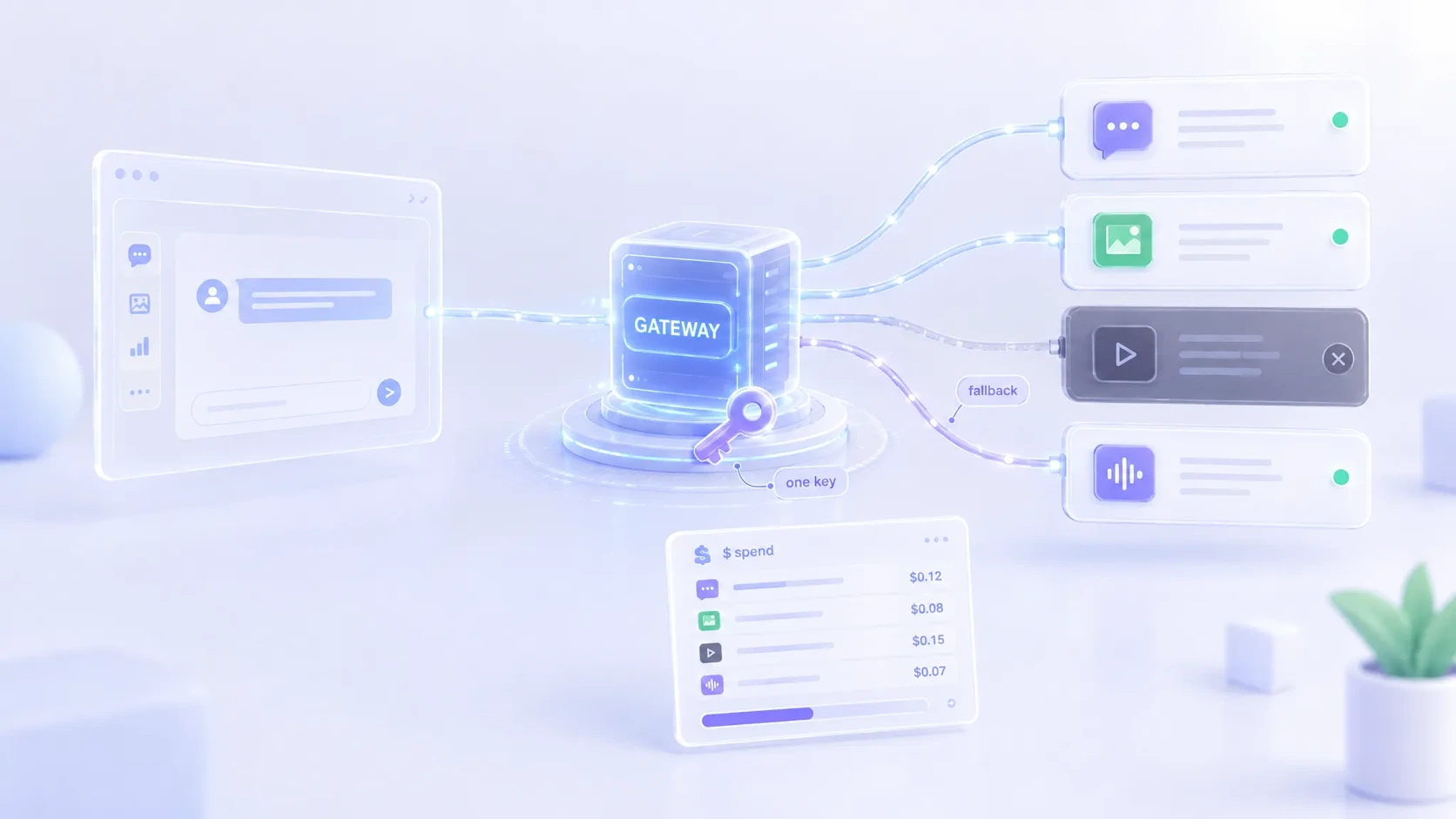
Run Both Models. One Key. Zero Overhead.
AI/ML API unifies access to GPT-5, Gemini 2.5 Pro, and 400+ other models with competitive pricing, fast inference, and a developer-first experience
Frequently Asked Questions
Is GPT-5 better than Gemini 2.5 Pro overall?
Not across every dimension. GPT-5 leads on formal reasoning, math benchmarks, and writing quality. Gemini 2.5 Pro leads on context window size, native multimodal processing, and web-grounded research. The "better" model depends on what you're building.
Which model is better for coding?
GPT-5 has a slight edge on SWE-bench (real-world bug fixing benchmarks) and performs better on complex architecture problems. Gemini 2.5 Pro is highly competitive and costs less per token for most standard-length coding tasks, making it worth considering for volume-heavy developer workflows.
Can I use both models without signing up to OpenAI and Google separately?
Yes. AI/ML API provides unified access to both GPT-5 and Gemini 2.5 Pro through a single API key and endpoint, using the standard OpenAI SDK format. You can switch between models by changing one parameter.
Does Gemini 2.5 Pro support video input?
Yes. Gemini 2.5 Pro was trained natively on video, audio, images, and text — not as add-ons. GPT-5 supports text and images but does not offer native video or audio processing.
.webp)