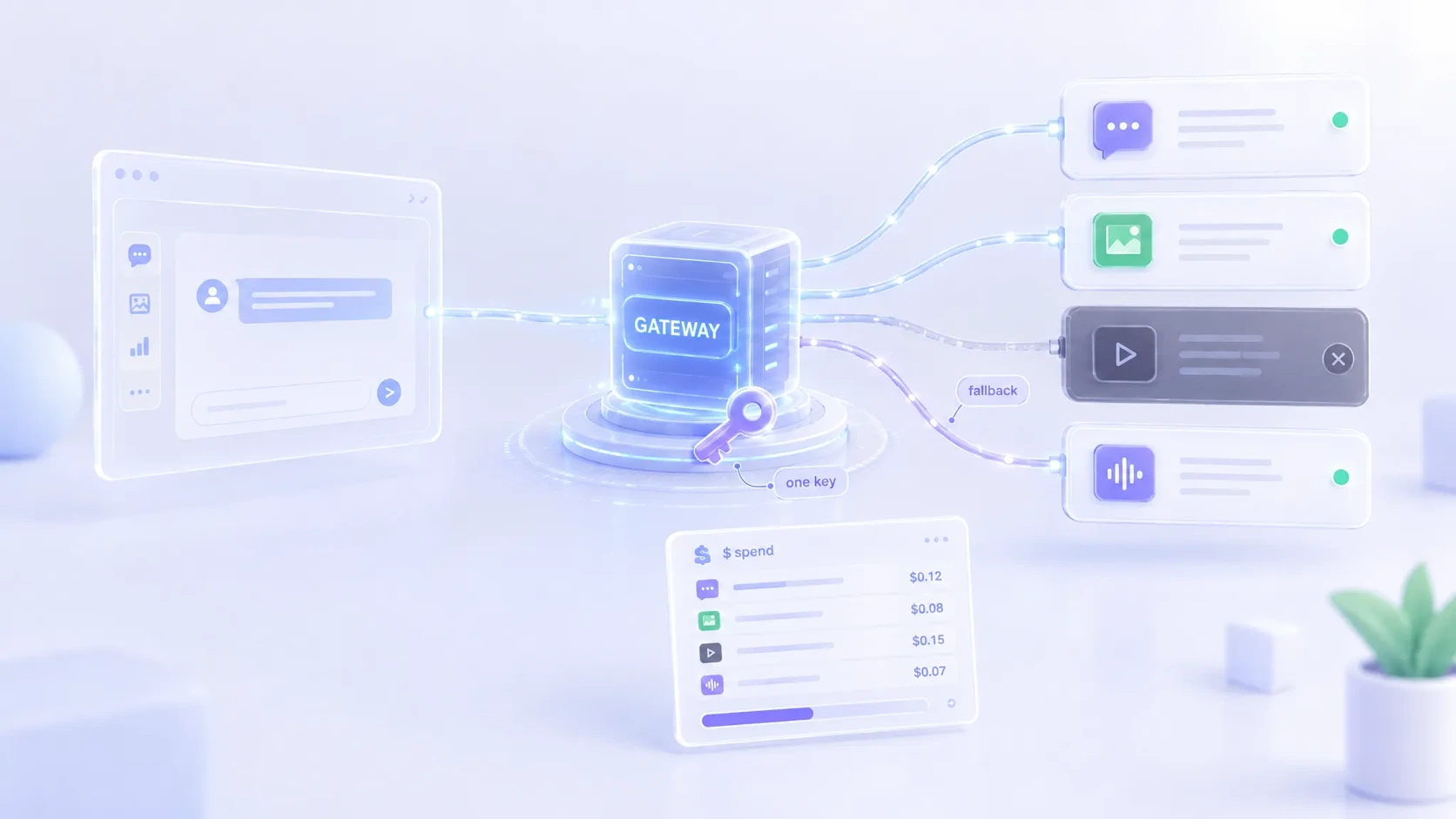

The Best OpenRouter Alternatives in 2026
Updated in September 2026.
OpenRouter remains one of the easiest ways to access many AI models through a single API, but it is no longer the only serious option. Depending on your stack, the best OpenRouter alternatives can offer broader media generation, self-hosting, deeper observability, tighter spending controls, fine-tuning, or closer integration with your cloud and application framework.
In this guide, we compare 11 established OpenRouter alternatives, explain where each platform is strongest, and assess how difficult it is to migrate.
Short Answer
If you're looking for an OpenRouter alternative, consider AI/ML API, an AI API gateway we've built. It offers a large hosted catalog spanning text, image, video, audio, voice, search, and other model types under one account. It also provides granular per-key spending limits, transparent usage observability, and up-to-date documentation with model-specific integration instructions for different technology stacks.
For more options, the table below compares the 11 best OpenRouter alternatives at a glance:
Why developers are looking beyond OpenRouter in 2026
OpenRouter built something genuinely useful: a single unified API that lets you swap between dozens of AI models without rewriting your integration. For teams running chatbots, summarization tools, code assistants, and other LLM workflows, it still does the job well.
But the AI landscape in 2026 looks nothing like it did in 2023. Multimodal functionality is now a baseline expectation. Apps need image generation on demand, video workflows have moved from research into production, and audio features such as TTS, transcription, and real-time voice are becoming standard. OpenRouter now supports several of these modalities, but teams may still need a broader catalog, different model-specific APIs, or more control over how media workloads are billed and routed.
There are three other friction points that keep coming up among developers actively switching:
- No crypto payment support. A meaningful slice of the AI developer community, especially internationally, prefers crypto-based billing. OpenRouter doesn't offer it.
- Community model gaps. OpenRouter's catalog skews toward foundation models. If you need niche fine-tunes, open-source variants, or very recent video models, you'll find holes.
- Routing complexity at scale. When you need fine-grained fallback logic, per-model SLAs, or dedicated throughput, a simple router starts to feel thin.
None of this makes OpenRouter a bad product. It makes it a specialized one. The alternatives below serve the use cases it doesn't.
How we evaluated the alternatives
We limited the list to mature, actively maintained platforms with a credible production history. When evaluating each platform, we looked at the following:
- How broad is the provider and model catalog?
- Which modalities are supported for both input and generation?
- Is the gateway hosted, self-hosted, or available inside a private cloud?
- How strong are routing, fallback, observability, budget, and governance controls?
- Can teams fine-tune or deploy custom models?
- How much application code and operational work does migration require?
Best OpenRouter Alternatives in 2026
AI/ML API — best for a broad multimodal model catalog
What AI/ML API offers
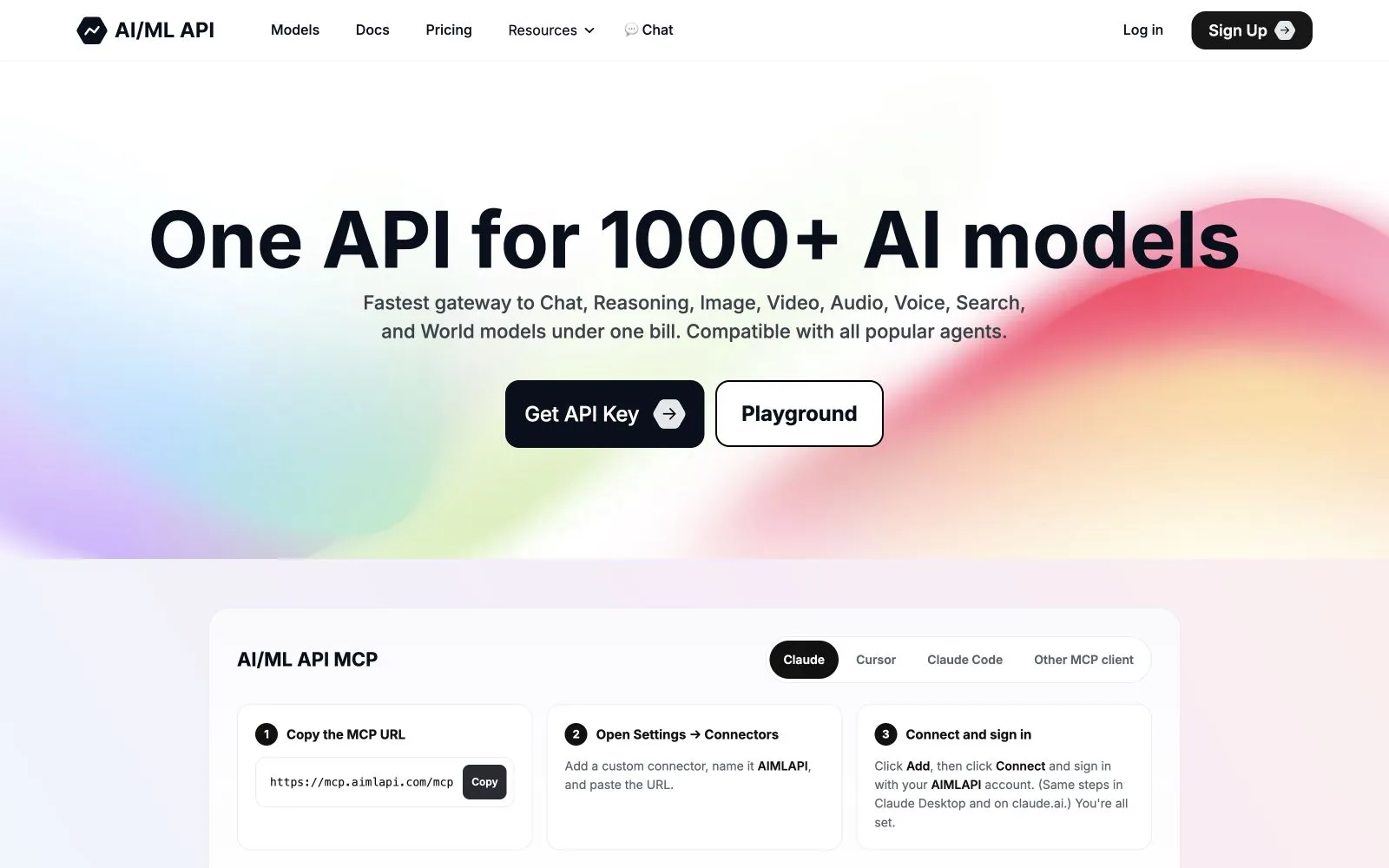
AI/ML API aggregates more than 1,000 AI models through a single platform. The catalog covers the full modality stack: language models from OpenAI, Anthropic, Google, Meta, and Mistral; image generation via GPT Image 2, Nano Banana 2, Seedream 5.0 Pro, and MAI-Image 2.5; video synthesis from Seedance 2.5, FLUX 3 Video, and Grok Imagine Video 1.5 Preview; and audio through ElevenLabs and MiniMax. That breadth makes it useful for products that combine several types of AI generation without requiring a separate provider account and billing setup for each one.
Pricing compared with OpenRouter
Both platforms use pay-as-you-go pricing, but AI/ML API extends the same account and billing model across text, image, video, and audio generation. Teams can test models from multiple vendors, maintain one prepaid balance, and use a shared usage dashboard instead of wiring separate billing and authentication for every provider. AI/ML API also supports crypto payments.
Migration path from OpenRouter
AI/ML API uses an OpenAI-compatible SDK interface. For compatible chat-completion requests, switching can be as small as changing one line: swap the base_url parameter from OpenRouter's endpoint to AI/ML API's. The headers, message format, and streaming configuration can usually carry over without modification. It is about as frictionless as a provider switch gets, although model IDs and API keys still need to change.
- 1,000+ models
- Image + Video + Audio
- Crypto payments
- OpenAI SDK compatible
- Pay-as-you-go
- No minimum spend
Where AI/ML API is not the right fit
If you have already built deep routing logic around OpenRouter's specific features — custom fallback chains, provider-weighted routing, or community model fine-tunes that OpenRouter hosts but AI/ML API does not — a full switch may not make sense. AI/ML API's catalog is broad but curated, which means some niche or community-submitted models available on OpenRouter may not appear there.
LiteLLM — best self-hosted OpenRouter alternative
- Best for: platform teams that want an OpenAI-compatible gateway they can run and control themselves.
- Watch for: self-hosting transfers upgrades, availability, security, and incident response to your team.
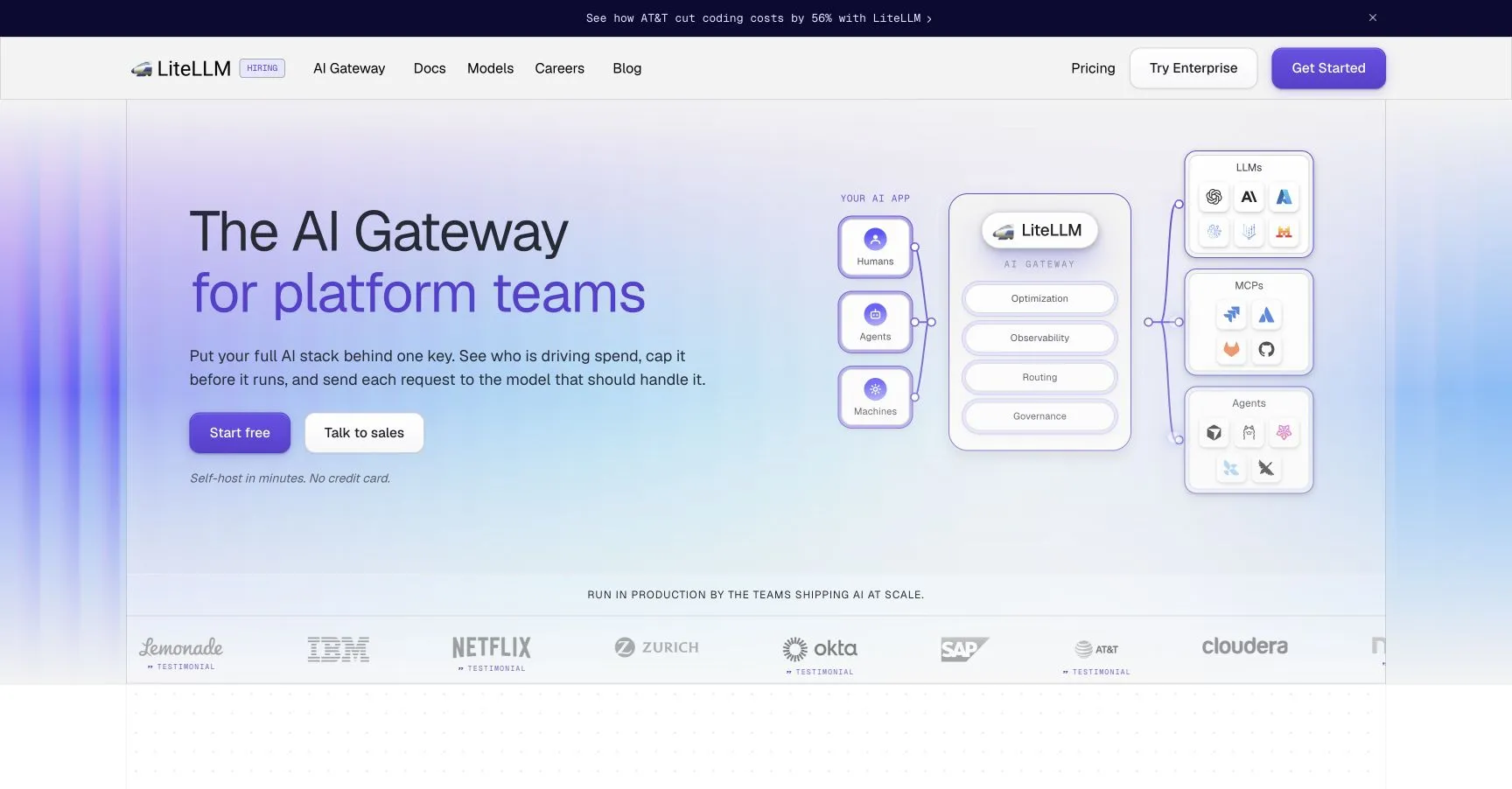
LiteLLM is an open-source AI gateway that supports more than 1,800 models across over 140 providers. The proxy exposes an OpenAI-compatible interface while adding load balancing, fallbacks, retries, caching, spend tracking, budgets, virtual keys, and policy controls.
This is the strongest choice when provider independence and deployment control matter more than having a completely managed experience. Teams can run the gateway in their own environment, keep provider keys under their control, and define how requests move among commercial APIs, open-model hosts, and internal endpoints. Enterprise options add features such as SSO, role-based access, audit logs, and support.
LiteLLM is not a model host in the same sense as AI/ML API, Together AI, or Replicate. It usually sits in front of providers that you still contract with and pay separately. That architecture reduces gateway lock-in, but it does not automatically reduce the operational burden of multiple vendor accounts.
Portkey — best for enterprise gateway governance
- Best for: organizations that need gateway policy, guardrails, governance, prompt management, and deep observability in one control plane.
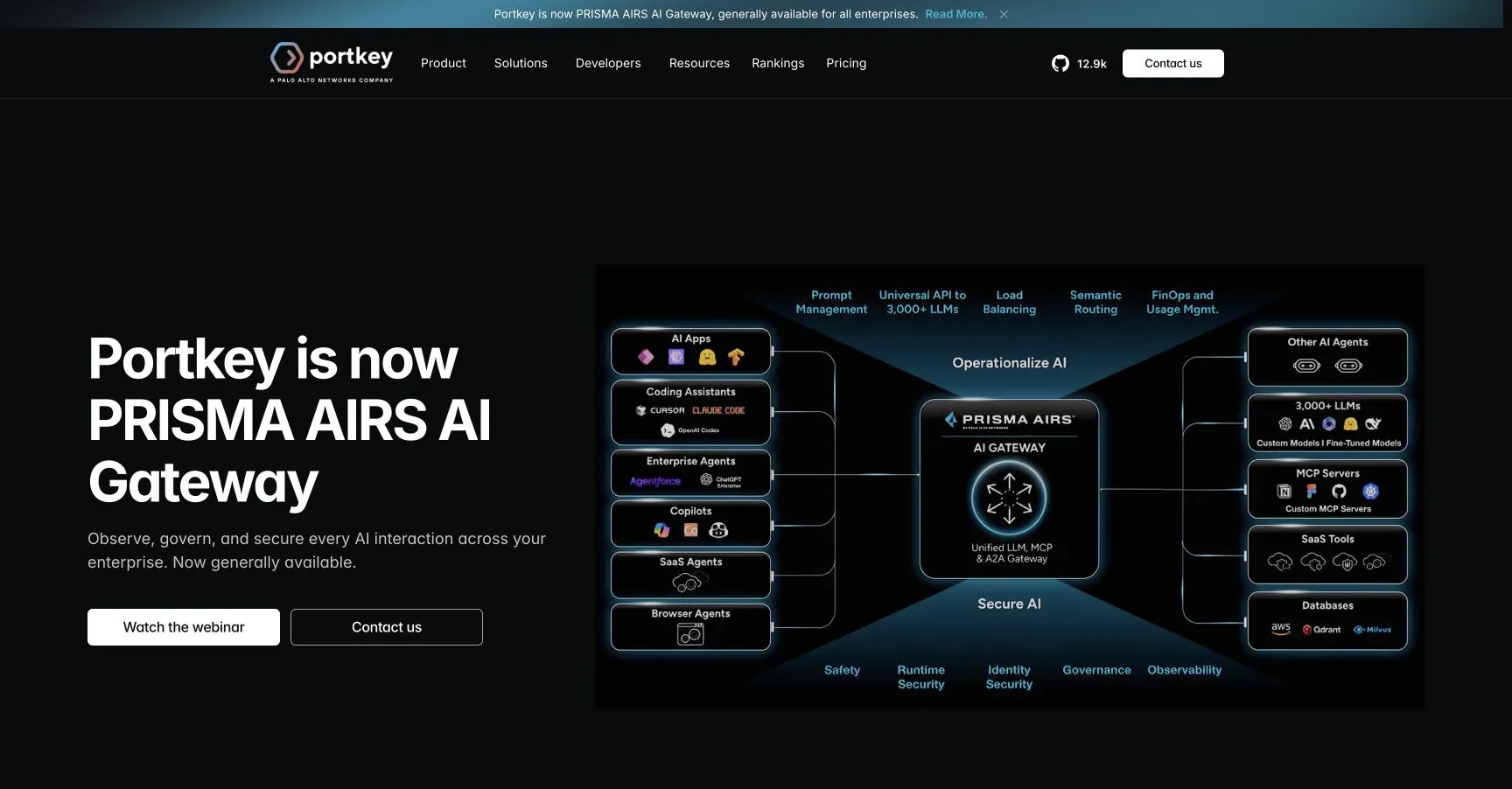
- Watch for: Portkey is transitioning to the Prisma AIRS AI Gateway brand, so both names remain in use.
Portkey has evolved from a developer gateway into a broader enterprise AI control layer. Now transitioning to Prisma AIRS AI Gateway, it provides unified access to more than 1,600 LLMs plus observability, guardrails, governance, and prompt management.
The main reason to choose Portkey is not simply model count. It is the ability to centralize how an organization authenticates, monitors, filters, and audits model traffic. That makes it relevant to platform and security teams managing many applications, providers, and business units.
For a small product that only needs a model catalog and basic fallback, Portkey may be more platform than necessary. For a regulated or security-conscious organization, however, the extra control is the point rather than overhead.
Cloudflare AI Gateway — best for edge-native control
- Best for: teams already using Cloudflare that want model traffic controlled close to the edge.
- Watch for: it is a gateway layer, not a single catalog and billing replacement for every underlying provider.
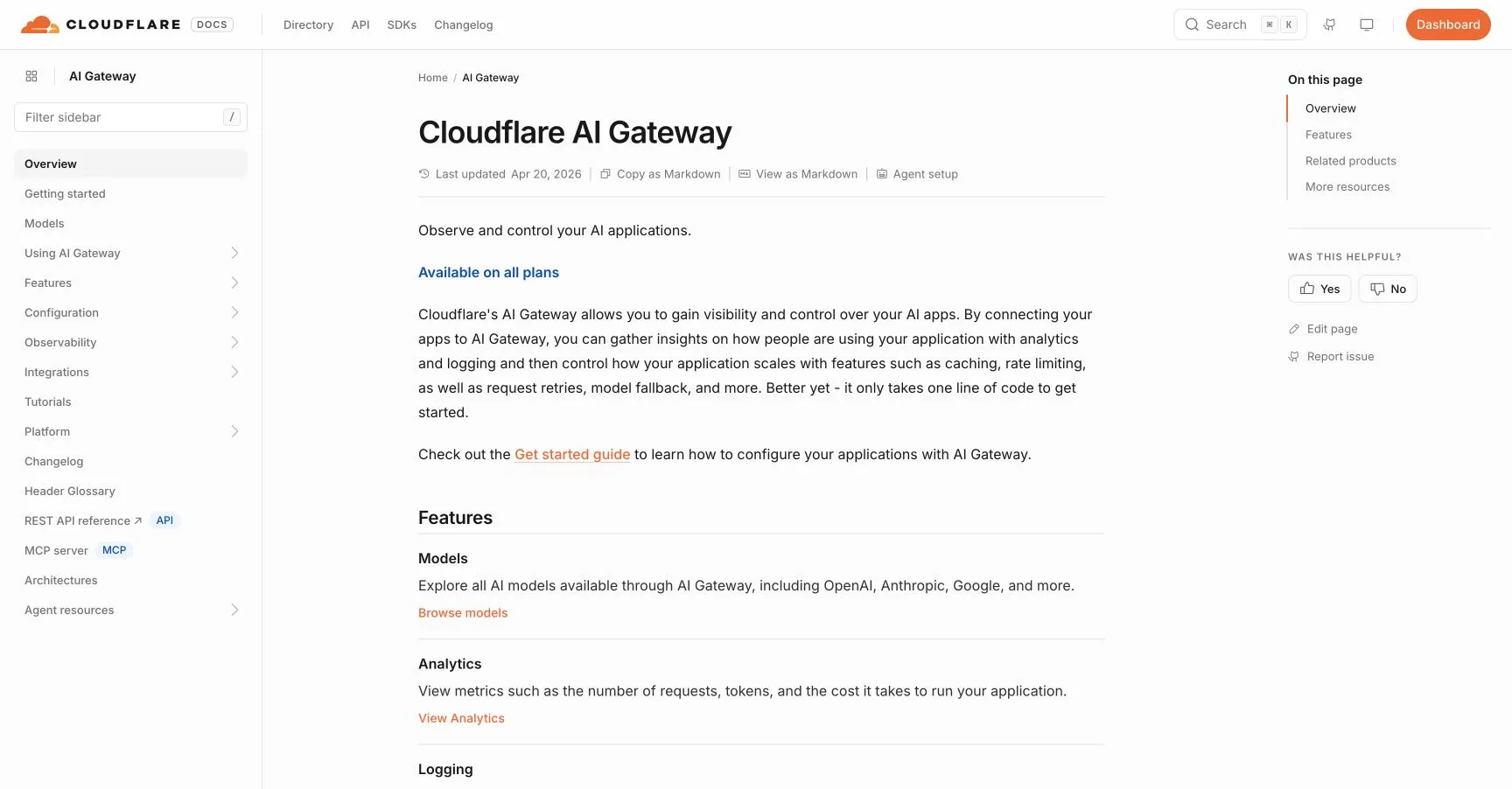
Cloudflare AI Gateway adds a control and observability layer in front of services such as Workers AI, Anthropic, Google Gemini, OpenAI, and Replicate. Its features include analytics and logging, caching, rate limiting, retries, model fallback, dynamic routing, and data-loss prevention.
The integration is attractive when Cloudflare already handles the application's network edge. Caching and rate controls can reduce unnecessary provider calls, while logs and fallback policies provide a central view of otherwise fragmented AI traffic.
Cloudflare does not remove the need to understand the providers behind the gateway. Model availability, billing, data rules, and account setup can still vary by integration. It is therefore better viewed as an edge control plane than as a direct one-for-one replacement for OpenRouter's marketplace experience.
Vercel AI Gateway — best for Next.js and Vercel teams
- Best for: teams building with the Vercel AI SDK, Next.js, or Vercel's deployment platform.
- Watch for: the convenience is greatest inside the Vercel ecosystem; teams should compare platform usage costs at their expected scale.
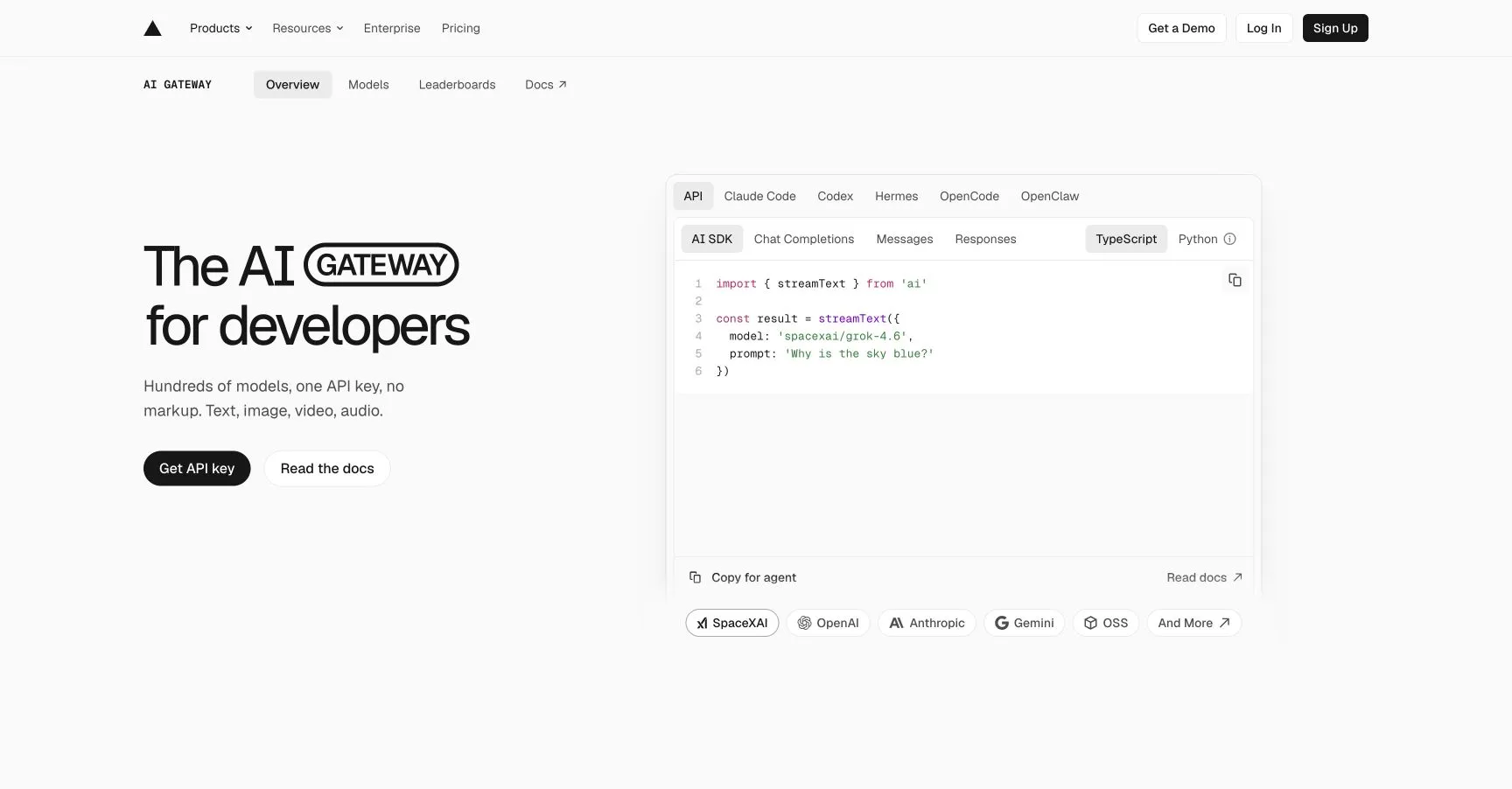
Vercel AI Gateway offers one key and a consistent API across hundreds of text, image, video, and audio models. It can route for availability, cost, or latency, fall back when a provider fails, and expose usage and performance data in the same platform used to deploy the application.
The migration path is especially smooth for applications already using the Vercel AI SDK. OpenAI- and Anthropic-compatible clients can migrate by changing the base URL. Model usage has no markup, and bring-your-own-key connections are available without a platform fee, although other Vercel features and usage can still be metered.
Vercel AI Gateway is a compelling application-layer choice, but it is not self-hosted infrastructure. Teams with strict private-network, multi-cloud, or independent-control-plane requirements should compare it with LiteLLM and Portkey.
Amazon Bedrock — best for AWS-native enterprise deployments
- Best for: enterprises that already standardize identity, networking, security, and procurement on AWS.
- Watch for: Bedrock is an AWS platform, not a lightweight drop-in router, and migration involves AWS-specific APIs and architecture.
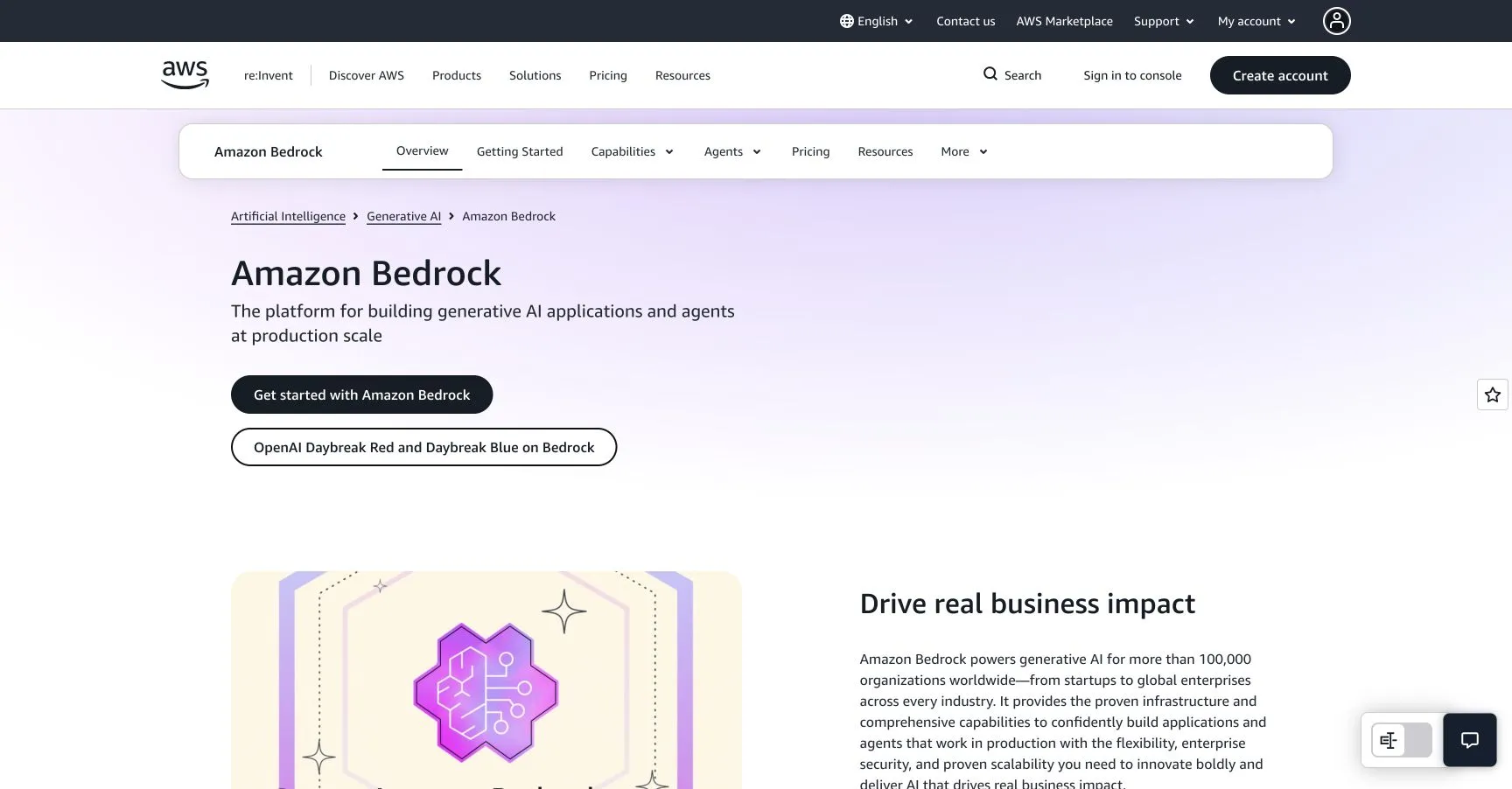
Amazon Bedrock provides managed access to hundreds of foundation models alongside agents, evaluations, knowledge bases, guardrails, model customization, monitoring, and cost controls. It is designed as a production platform rather than a thin proxy.
The advantage is integration with the rest of AWS: IAM, private networking, regional deployment, logging, compliance programs, and enterprise procurement. For organizations already operating on AWS, those controls may outweigh the convenience of a provider-neutral gateway.
The tradeoff is ecosystem commitment. Bedrock's APIs, permissions, quotas, regions, and service architecture require more platform work than swapping an OpenAI-compatible base URL. Teams should also verify that the exact model and feature they need are available in the required region.
Google Vertex AI / Gemini Enterprise — best for Google Cloud teams
- Best for: organizations using Google Cloud for data, ML operations, Gemini models, and enterprise agents.
- Watch for: Google is changing the product framing, so current materials may refer to both Vertex AI and Gemini Enterprise Agent Platform.
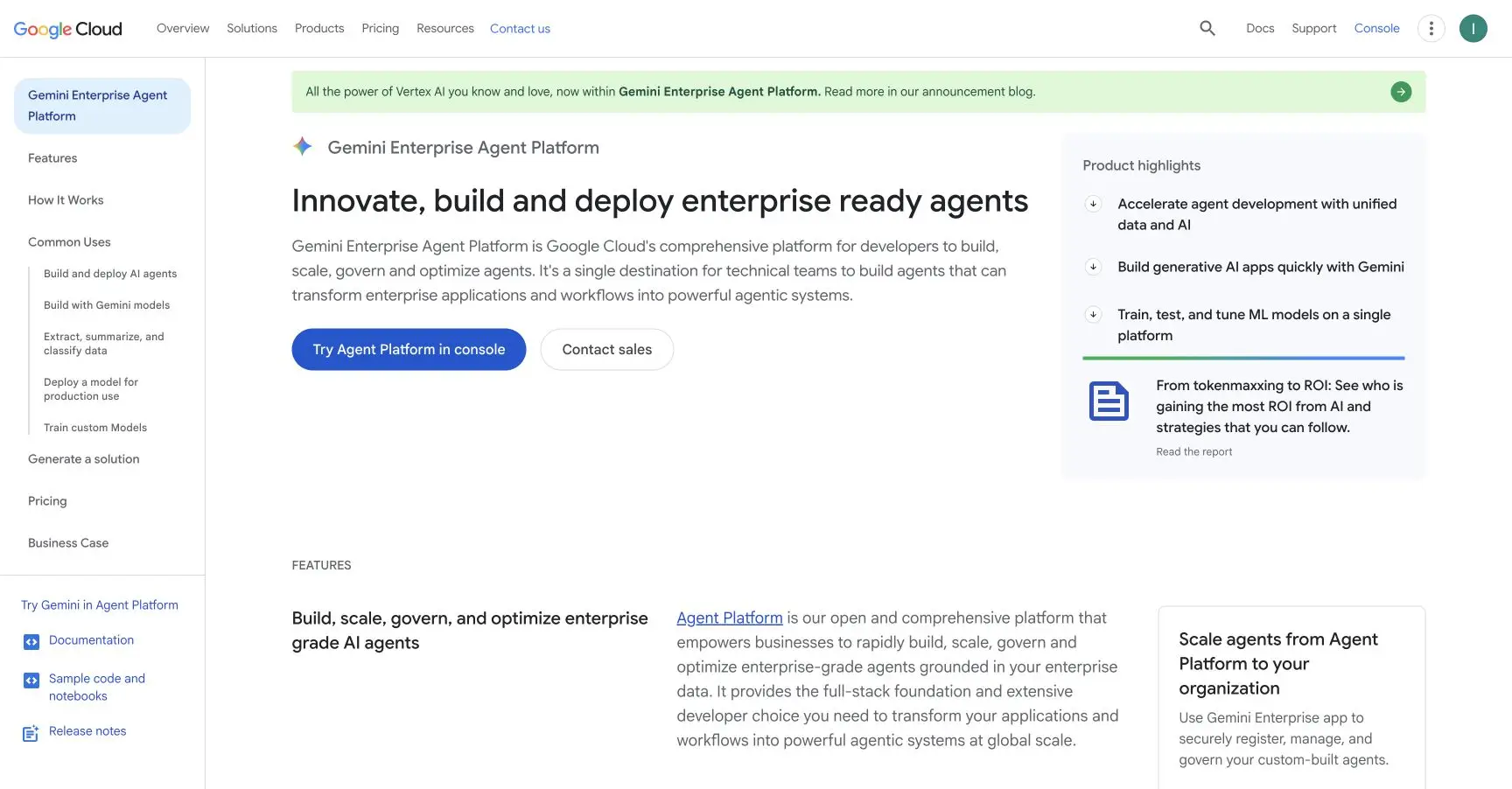
Vertex AI's capabilities are now part of Gemini Enterprise Agent Platform. The offering combines Gemini with more than 200 Google and third-party models and tools, plus Model Garden, training, tuning, deployment, evaluation, agents, and MLOps.
This is the broadest end-to-end ML platform in the comparison. It makes sense when model inference is one part of a larger Google Cloud architecture involving BigQuery, data pipelines, model development, governance, and production operations.
It is not the simplest choice for a developer who only wants one API key and a broad external model marketplace. Product naming, regional availability, permissions, and Google Cloud architecture add complexity that a hosted aggregator deliberately hides.
Helicone — best for observability-first LLM operations
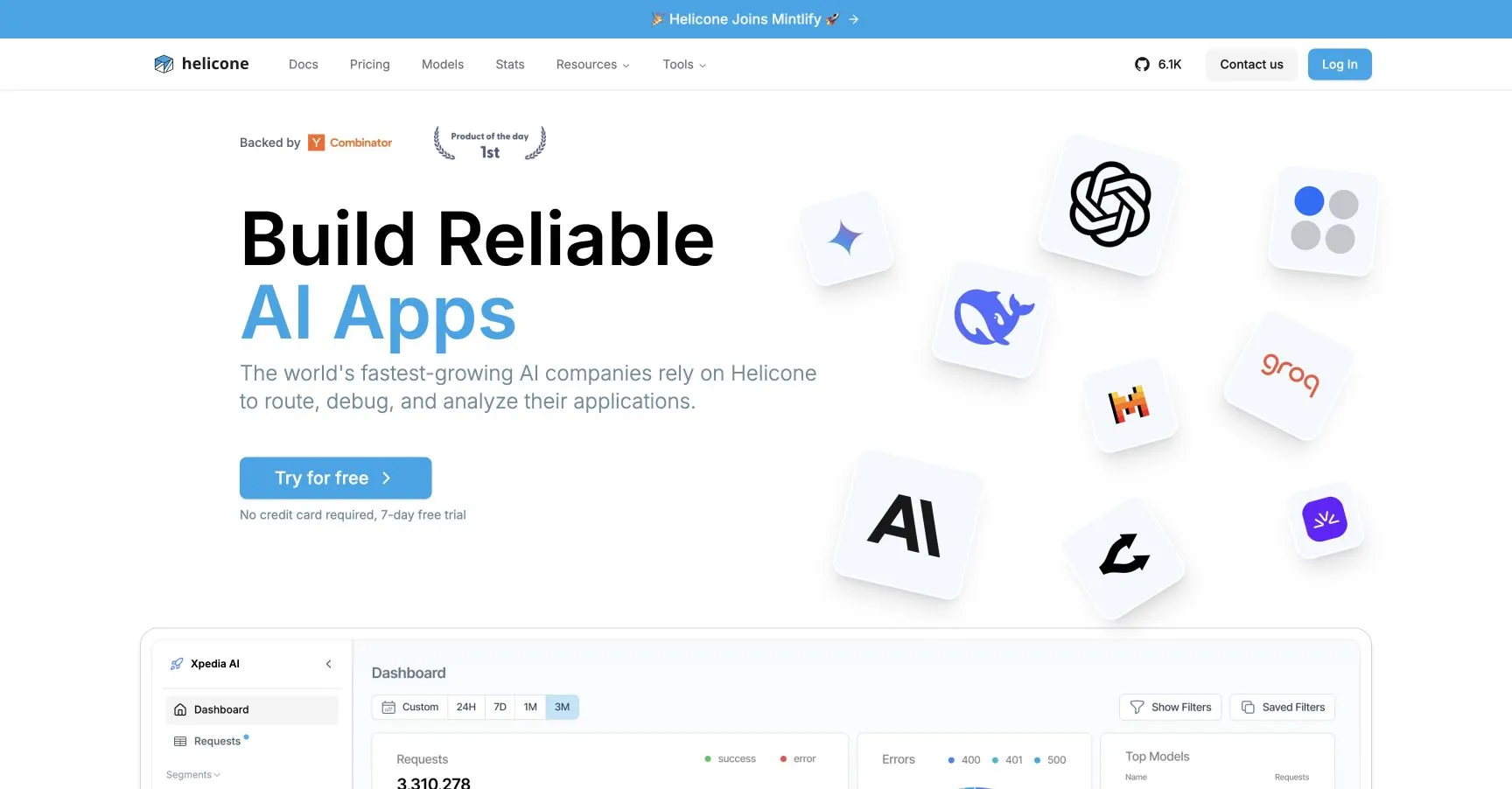
- Best for: teams that are satisfied with their providers but need better traces, cost visibility, prompt analysis, and operational debugging.
- Watch for: Helicone's center of gravity is observability; it is not a broad media-model marketplace.
Helicone focuses on making AI applications easier to route, debug, and analyze. Its product covers requests, sessions, users, prompts, datasets, costs, rate limits, and alerts, giving developers a clearer picture of what happens between an application and its model providers.
Helicone is useful when the real pain is not model access but production visibility. A team can preserve existing provider relationships while adding a proxy and dashboard for debugging failures, comparing prompts, tracking spend, and understanding user-level behavior. Open-source and self-hosted paths also make it relevant to teams that want more control over telemetry.
If the goal is unified billing for a huge image and video catalog, another platform will be a closer replacement. Helicone is best understood as an operational layer that can coexist with direct providers or another router.
Together AI — best for open-model inference and fine-tuning
- Best for: teams serving open models at scale or moving from serverless inference to dedicated capacity.
- Watch for: it is infrastructure for running and shaping models, not a neutral marketplace for every closed-model provider.
Together AI is purpose-built for open and specialized models. Its platform includes serverless and batch inference, fine-tuning and training, dedicated endpoints, provisioned throughput, and custom container deployments. That gives teams a path from experimentation to controlled production capacity without building a GPU serving stack from scratch.
Fine-tuning is a first-class capability. If the roadmap involves adapting an open model on proprietary data, benchmarking variants, or reserving predictable throughput, Together AI offers substantially more infrastructure than a routing marketplace.
Earlier descriptions of Together AI as strictly text-only are now too narrow. Its platform includes image models, and dedicated container infrastructure can serve video, audio, and image workloads. Even so, teams should validate whether the exact media model they need is available as a managed endpoint or requires a custom deployment.
Replicate — best for community and custom models
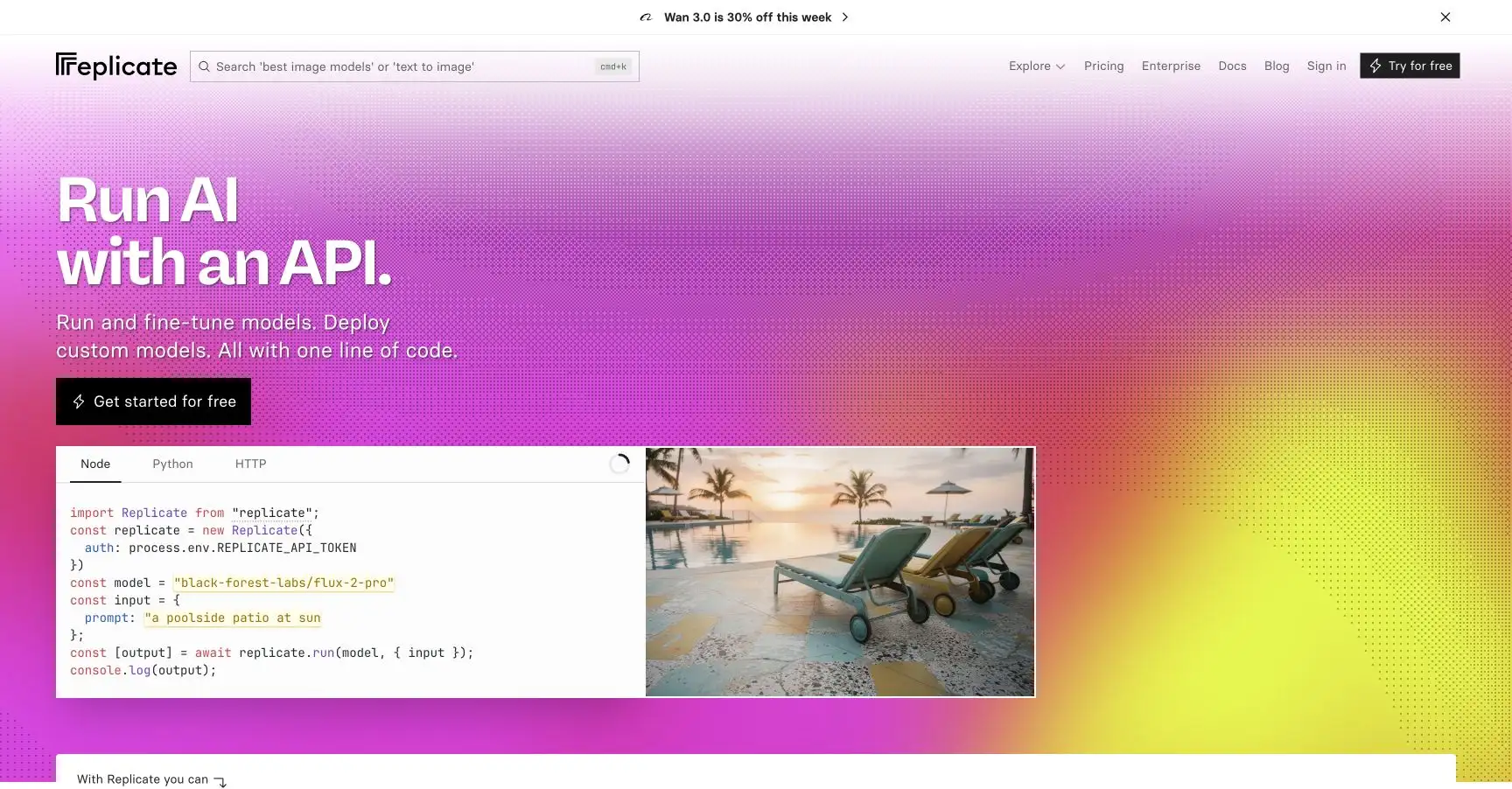
- Best for: prototyping with public models, fine-tuning supported models, and exposing a custom model through an API.
- Watch for: startup time, hardware choice, and runtime-based costs can vary materially by model.
Replicate made model deployment approachable: choose a public model or package your own with Cog, then call a versioned API. Its catalog spans image, video, speech, music, and language models, including experimental and community-published options that may not be available in curated gateways.
This makes Replicate particularly useful for research, creative tooling, and products that depend on a specific open model rather than interchangeable foundation-model routing. Custom models can scale down when idle, which reduces infrastructure work but can introduce startup delay for inactive deployments.
Pricing depends on the model and hardware runtime, so cost comparison requires a representative workload rather than token prices alone. For a stable high-volume endpoint, compare the economics of a Replicate deployment with dedicated capacity from Together AI, Fireworks AI, or a cloud provider.
Fireworks AI — best for optimized production inference
- Best for: teams prioritizing production throughput and latency for open and specialized models.
- Watch for: the catalog is more curated than a broad aggregator, and the strongest fit is model infrastructure rather than media-marketplace breadth.
Fireworks AI provides serverless inference, batch processing, fine-tuning, and on-demand or reserved capacity for open and specialized models. Its APIs are OpenAI-compatible, with Anthropic-compatible options for supported workloads, which reduces migration work for common chat applications.
The platform's value is operational performance: teams can begin with pay-per-token serverless inference and move to more predictable capacity as traffic grows. It is a strong candidate for latency-sensitive chat, coding, retrieval, and agent workloads where throughput and model-serving efficiency are the dominant constraints.
How to choose an OpenRouter alternative
Start with the limitation that made you consider leaving OpenRouter. A platform that solves that specific problem is more useful than one with the longest feature list.
1. Choose between managed and self-hosted
A managed gateway is easier to deploy and maintain. A self-hosted gateway gives you more control over credentials, routing, logs, and data handling, but requires more engineering work.
Choose based on your security requirements, infrastructure capacity, and support needs.
2. Define your model requirements
Write down the exact model families and versions your application depends on, then add the required modalities, context limits, structured output, tool calling, streaming, regions, rate limits, and version-stability expectations. Separate non-negotiable requirements from features that would merely be useful.
Check each platform against those requirements. Model count matters less than support for the models and capabilities your application actually uses.
3. Test with realistic traffic
Use prompts, response sizes, concurrency levels, and request patterns that match production.
Measure:
- time to first token
- total latency
- error rate
- timeout rate
- retry behavior
- fallback behavior
- rate-limit handling
- output consistency
For agents, test tool calls, structured output, streaming, and multi-step requests.
For image, audio, and video models, measure queue time as well as generation time.
4. Compare total cost
Compare the cost of a representative month, not one model's advertised token price. Start with model usage and gateway fees, then include pricing markup, minimum commitments, prepaid credits, logging, storage, network costs, and support.
For a self-hosted gateway, add infrastructure, maintenance, upgrades, and on-call work. Dedicated capacity may look expensive during testing but become more economical when usage is consistently high.
5. Check data handling and governance
Trace the full path of a request: what the gateway stores, what the selected model provider stores, where both process the data, and how long logs remain available. Zero-retention options and regional controls should cover the upstream provider as well as the gateway.
For organizational access, verify encryption, audit logs, SSO, permissions, compliance coverage, and policy or guardrail controls. A strong gateway policy does not compensate for an upstream provider whose data practices do not meet your requirements.
How to migrate from OpenRouter
Migrating from OpenRouter is straightforward if your application already uses the OpenAI SDK and the Chat Completions format. In that case, the client, messages array, and most request parameters can stay in place. You mainly need to create an API key in your new provider, change the base URL, and use a model ID available on their platform. The basic migration can take only a few minutes, but OpenRouter-specific routing settings and non-chat APIs require additional testing. We will use AI/ML API as the example below to show the entire process.
Step 1: Create an AI/ML API key
Create an account, open the API Keys section, and generate a new key. Give it a descriptive name for the application or environment, such as production-chat or staging-agents.
Copy the key when it is created and store it in your secret manager or environment variables. The full value is shown only once. AI/ML API keys can also have individual spending limits, so production, staging, and development traffic do not need to share one unrestricted key.
The AI/ML API key guide covers key creation and spending limits.
Step 2: Keep or install the OpenAI SDK
If your OpenRouter integration already uses the OpenAI SDK, you do not need a new client library. Otherwise, install it for your language:
pip install openainpm install openaiAI/ML API also supports direct REST requests, but keeping the same SDK makes the migration smaller. The available client options are listed in the supported SDKs guide.
Step 3: Replace the API key and base URL
An OpenRouter Python client typically looks like this:
openrouter_client = OpenAI(
    base_url="https://openrouter.ai/api/v1",
    api_key="<OPENROUTER_API_KEY>",
)
Create the AI/ML API client with the new key and https://api.aimlapi.com/v1 as the base URL:
from openai import OpenAI

client = OpenAI(
    base_url="https://api.aimlapi.com/v1",
    api_key="<YOUR_AIMLAPI_KEY>",
)
If your OpenRouter client includes HTTP-Referer or X-OpenRouter-Title headers, remove them. They are OpenRouter-specific and are not required by AI/ML API.
Step 4: Choose the corresponding model ID
Model names are not guaranteed to match across gateways. Find the model in the AI/ML API model catalog and copy its exact model ID from the integration example.
For example, this request uses google/gemma-3-4b-it:
response = client.chat.completions.create(
    model="google/gemma-3-4b-it",
    messages=[
        {
            "role": "user",
            "content": "Explain the difference between latency and throughput.",
        }
    ],
    temperature=0.7,
    max_tokens=512,
)

print(response.choices[0].message.content)
Do not assume that an OpenRouter model slug will work unchanged. Map every model used by the application and verify its context window, supported inputs, tools, structured output, and other required capabilities before switching traffic.
Step 5: Test streaming and application-specific parameters
For a streaming chat request, keep stream=True and process the returned chunks as before:
stream = client.chat.completions.create(
    model="google/gemma-3-4b-it",
    messages=[{"role": "user", "content": "Write a short product description."}],
    stream=True,
)

for chunk in stream:
    content = chunk.choices[0].delta.content
    if content:
        print(content, end="")
Run the same checks for function calling, structured output, JSON mode, embeddings, file inputs, and any provider-specific parameters your application uses. OpenAI compatibility preserves the overall request shape, but individual models do not necessarily support the same features.
Step 6: Recreate routing and fallback behavior
Changing the base URL does not automatically reproduce OpenRouter-specific behavior. If the existing integration uses provider preferences, fallback chains, model aliases, data-policy filters, or custom routing rules, document each rule and rebuild the required behavior before cutover.
At minimum, test:
- primary and fallback models
- request timeouts and retries
- rate-limit responses
- streaming interruptions
- tool-call and structured-output failures
- usage and cost reporting
Step 7: Handle image, video, and audio APIs separately
Image generation uses POST /v1/images/generations with a model and prompt; supported image-editing models use POST /v1/images/edits. Video is asynchronous: submit the job to POST /v2/video/generations, take the returned id, and poll GET /v2/video/generations?generation_id=<id> until the status is completed or error. A completed response contains the result in video.url.
Text-to-speech uses POST /v1/tts with fields such as model, text, and voice. Speech-to-text starts with POST /v1/stt/create; use the returned generation ID with GET /v1/stt/{generation_id} to retrieve the transcription.
Step 8: Move production traffic gradually
Start with a test environment or a small share of production traffic. Compare output quality, latency, errors, token accounting, and cost before completing the migration. Keep the OpenRouter configuration available as a rollback path until the new integration has handled representative traffic successfully.
For a standard OpenAI-compatible chat integration, the practical change is still small: a new key, a new base URL, and an updated model ID. The remaining steps make sure that the apparently simple code change behaves correctly in production.
When to switch from OpenRouter and when to stay
Switch to AI/ML API if you need:
- Image generation models (GPT Image 2, Nano Banana 2, Seedream 5.0 Pro, MAI-Image 2.5)
- Video synthesis — Seedance 2.5, FLUX 3 Video, Grok Imagine Video 1.5 Preview, or similar
- Text-to-speech or audio generation (ElevenLabs, MiniMax)
- Crypto payment support
- Access to the newest video models before they land elsewhere
- Single-vendor billing across all modalities
Stay on OpenRouter if:
- Your stack is purely LLM — no image, video, or audio generation anywhere in the pipeline
- You've built complex custom routing logic that's working well
- You depend on specific community models that OpenRouter hosts but AI/ML API doesn't
- You need OpenRouter's specific provider-weighting or fallback features at a granular level
The clearest signal that it's time to leave OpenRouter: you're managing two or three separate provider accounts (one for LLMs, one for image gen, one for audio) because OpenRouter can't cover them. That operational complexity is exactly what AI/ML API eliminates.
Switch to Replicate if you need:
- A specific community-uploaded or fine-tuned model that no other platform carries
- The ability to deploy your own custom model via API with minimal infra work
- An experimental or research model that's only available in the Replicate ecosystem
Switch to Together AI if you need:
- Cost-optimized, high-throughput LLM inference on open-source models
- Managed fine-tuning without GPU provisioning overhead
- A clear path from serverless to dedicated capacity as usage scales
Frequently asked questions
What is the closest alternative to OpenRouter?
For a hosted API with broad model access and unified billing, AI/ML API and Vercel AI Gateway are among the closest alternatives. AI/ML API is stronger when a broad multimodal catalog and one prepaid account are the priorities. Vercel is especially attractive for teams already using the Vercel AI SDK and platform.
What is the best self-hosted OpenRouter alternative?
LiteLLM is the strongest general-purpose self-hosted option in this comparison. It exposes an OpenAI-compatible proxy across more than 140 providers and adds routing, fallbacks, budgets, virtual keys, caching, and governance controls.
Which OpenRouter alternative is best for enterprise governance?
Portkey is purpose-built around gateway governance, guardrails, observability, and prompt management. Amazon Bedrock and Google's enterprise AI platform are stronger candidates when the organization is already standardized on the corresponding cloud and needs its identity, networking, regional, and compliance controls.
Which alternative is best for image and video models?
AI/ML API is the most straightforward option for a large hosted catalog under one account. Replicate is particularly strong for community and experimental media models or custom deployments. Vercel AI Gateway and OpenRouter also support image and video generation, so teams should compare the exact models and endpoint behavior rather than rely on a generic “multimodal” label.
Which alternative is best for open-source models?
Together AI and Fireworks AI are strong managed choices for production open-model inference and fine-tuning. Replicate is better when access to a specific public or experimental model matters more than optimized high-volume serving. LiteLLM is the gateway choice when you want to route among several open-model hosts or your own endpoints.
Are there free OpenRouter alternatives?
LiteLLM's proxy is open source and can be self-hosted, but the infrastructure and upstream model calls still cost money. Managed platforms sometimes offer trial credits or limited free usage; those terms change frequently and should not be treated as a production pricing strategy.
Can I use an AI gateway in front of OpenRouter?
Yes. A control layer such as LiteLLM, Portkey, Cloudflare AI Gateway, or Helicone can sit in front of OpenRouter when the integration supports it. This can add observability, policy, or fallback across OpenRouter and direct providers, but it also adds another network hop and another system to monitor.
Bottom line
An OpenRouter alternative may be worth considering if you need broader multimodal coverage, self-hosting, tighter governance, custom model deployment, dedicated capacity, different payment options, or more control over routing and costs.
Switching probably does not make sense if OpenRouter already carries the models you use, meets your reliability and data requirements, and the existing integration is inexpensive to operate. In that case, migration adds work without solving a meaningful problem.
Either way, the choice is now broad: you can use a hosted model aggregator, operate your own gateway, adopt a cloud-native platform, or work directly with specialized inference providers. The best option is the one that removes a real constraint from your application without introducing a larger one elsewhere.